
Botox vs. Dysport vs. Minitox: Which Neurotoxin Is Right for You
If you have been researching wrinkle-relaxing treatments, you have probably come across the names Botox, Dysport, and Minitox. While all three are neurotoxin-based and work by temporarily reducing muscle activity or surface skin contraction, they are not interchangeable. Choosing the right one for your face, your goals, and your anatomy matters more than most people realize.
At Melluna in Wilton, CT, our injectors work with patients from across Fairfield County — including Westport, Weston, New Canaan, Darien, and Greenwich — and one of the most common questions we hear during consultations is: what is the difference between these three options? Here is a clear breakdown.
What Is Botox?
Botox (onabotulinumtoxinA) is the most widely recognized FDA-approved neurotoxin on the market. It has a heavier molecular structure and a relatively stable diffusion pattern, meaning it stays close to the injection site. This precision makes Botox the preferred choice for smaller, more defined treatment areas.
It is particularly effective for frown lines between the brows (glabellar lines), crow's feet at the outer corners of the eyes, forehead lines when a controlled and localized result is preferred, lip lines, chin dimpling, and brow lifting. Results from Botox typically appear within three to seven days and last three to four months for most patients.
At Melluna, Botox is frequently used when a patient needs precise placement in a specific area, or when they have had excellent results with it previously and prefer consistency. It is a reliable, well-documented product with decades of clinical safety data behind it.
What Is Dysport?
Dysport (abobotulinumtoxinA) has a lighter molecular formula, which allows it to spread more evenly from the injection site. Rather than being a drawback, this quality makes Dysport particularly well-suited for larger treatment areas where a more diffuse, seamlessly blended result is the goal.
It is especially effective for the forehead — particularly in patients with longer foreheads or broader muscle groups — and for areas where a softer, more natural transition is the aesthetic priority. Many patients report that Dysport takes effect slightly faster than Botox, sometimes within two to three days. Duration is similar, at approximately three to four months.
It is worth noting that Dysport is measured in different units than Botox. The conversion is not one-to-one, which is why dosing decisions should always happen with a qualified provider during a proper consultation rather than based on what a friend or an online source recommends.
What Is Minitox?
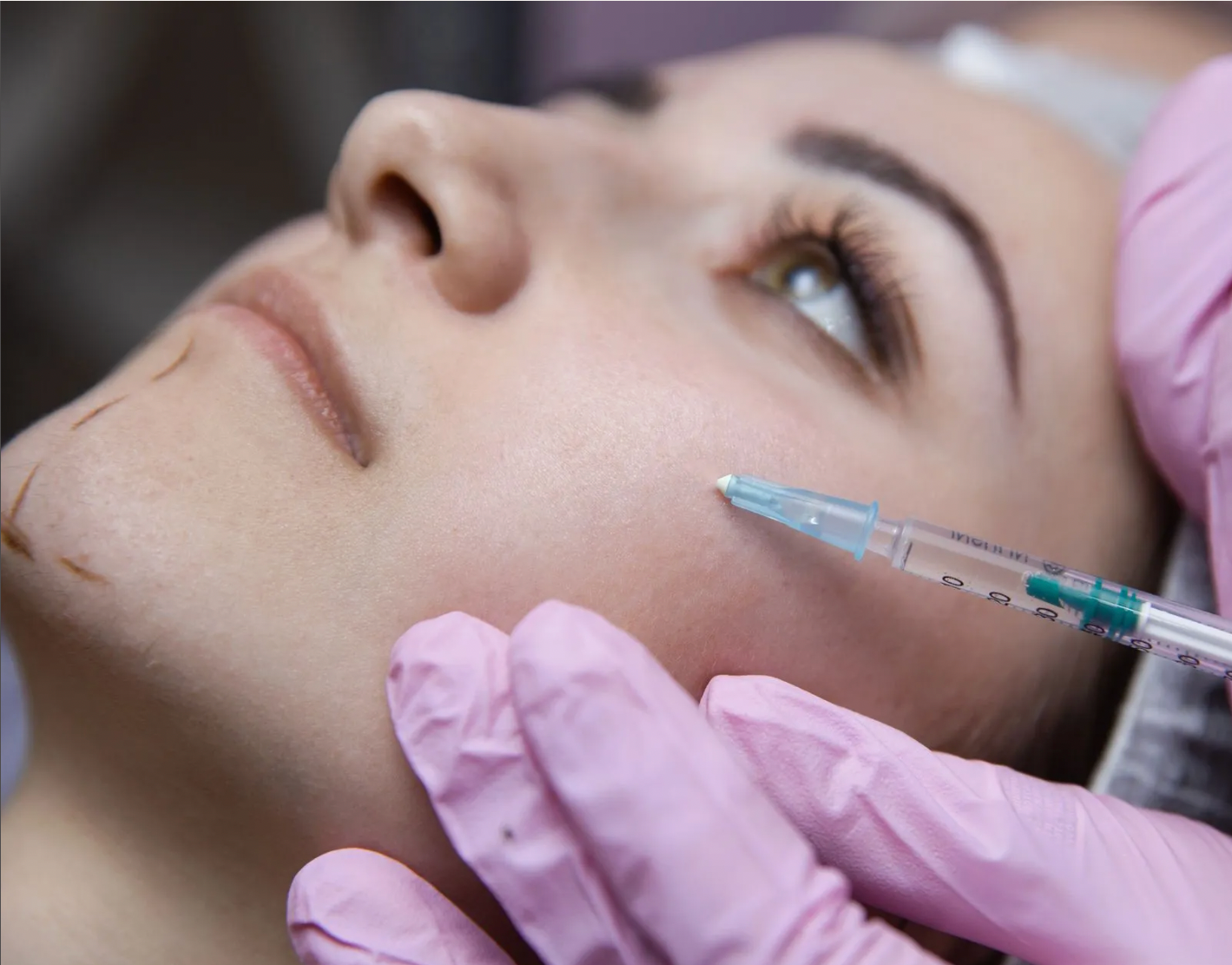
Minitox is not a separate neurotoxin product. It is a specialized injection technique that uses a diluted concentration of Botox or Dysport, delivered superficially into the skin itself rather than into the underlying muscle. This approach is sometimes called intradermal microdosing or micro-tox, and the effect is notably different from standard neurotoxin treatment.
Rather than relaxing a muscle to soften a wrinkle, Minitox creates a subtle tightening of the skin surface, improving texture, reducing pore size, and softening the fine superficial lines that standard neurotoxin cannot address. It can also help with sebum production, making it useful for patients with oily, acne-prone, or rosacea-affected skin.
Minitox is particularly well-suited for the neck and jawline, cheeks, the area around the mouth, and the decolletage. The results are subtler than full-muscle treatment by design. It complements your natural features rather than altering them, and it pairs beautifully as part of a broader same-day treatment plan.
Which Neurotoxin Is Right for You?
The honest answer is that it depends on your anatomy, your treatment areas, your aesthetic goals, and your history with injectables. Some patients benefit most from Botox alone. Others see better results with Dysport. Many patients at Melluna use both in different areas during the same appointment — Botox for precision work around the eyes and Dysport for the forehead, for example. And patients who want skin texture improvement alongside traditional wrinkle treatment often layer Minitox into the same visit.
What none of this should be is a decision made based on a product name you read online or a friend's recommendation. The right neurotoxin is the one that fits your specific face, placed correctly by an injector who understands your anatomy and takes the time to assess it properly.
At Melluna in Wilton, CT, every neurotoxin appointment begins with a thorough consultation and a detailed assessment of your facial structure, muscle movement, and what you want to achieve. We serve patients from throughout Fairfield County, including Westport, Weston, New Canaan, Darien, Greenwich, Stamford, and Norwalk.
FAQ
How long do neurotoxin results last?
Most patients see results lasting three to four months. Patients who stay on a consistent maintenance schedule often find their results extend slightly over time, as repeated treatments can train the muscles to relax more fully between sessions.
Does neurotoxin treatment hurt?
Neurotoxin injections use extremely fine needles and most patients describe the sensation as a very brief, mild pinch. Discomfort is minimal and typically over within seconds. Numbing cream is available on request, though most patients do not require it.
Can I combine neurotoxins with other treatments?
Yes, and it is very common. Neurotoxins pair well with dermal fillers, skin boosters, PDO threads, and Minitox. At Melluna, we frequently design same-day treatment plans that address multiple concerns in a single visit.
How soon will I see results?
Botox typically takes effect within three to seven days. Dysport may show results slightly earlier. Full results are generally visible at two weeks, which is when we schedule follow-up assessments for new patients.
Ready to find out which neurotoxin is right for your face? Book a consultation at Melluna in Wilton, CT.