

What Are Exosomes — and Why Are They One of the Most Advanced Skin Treatments Available?
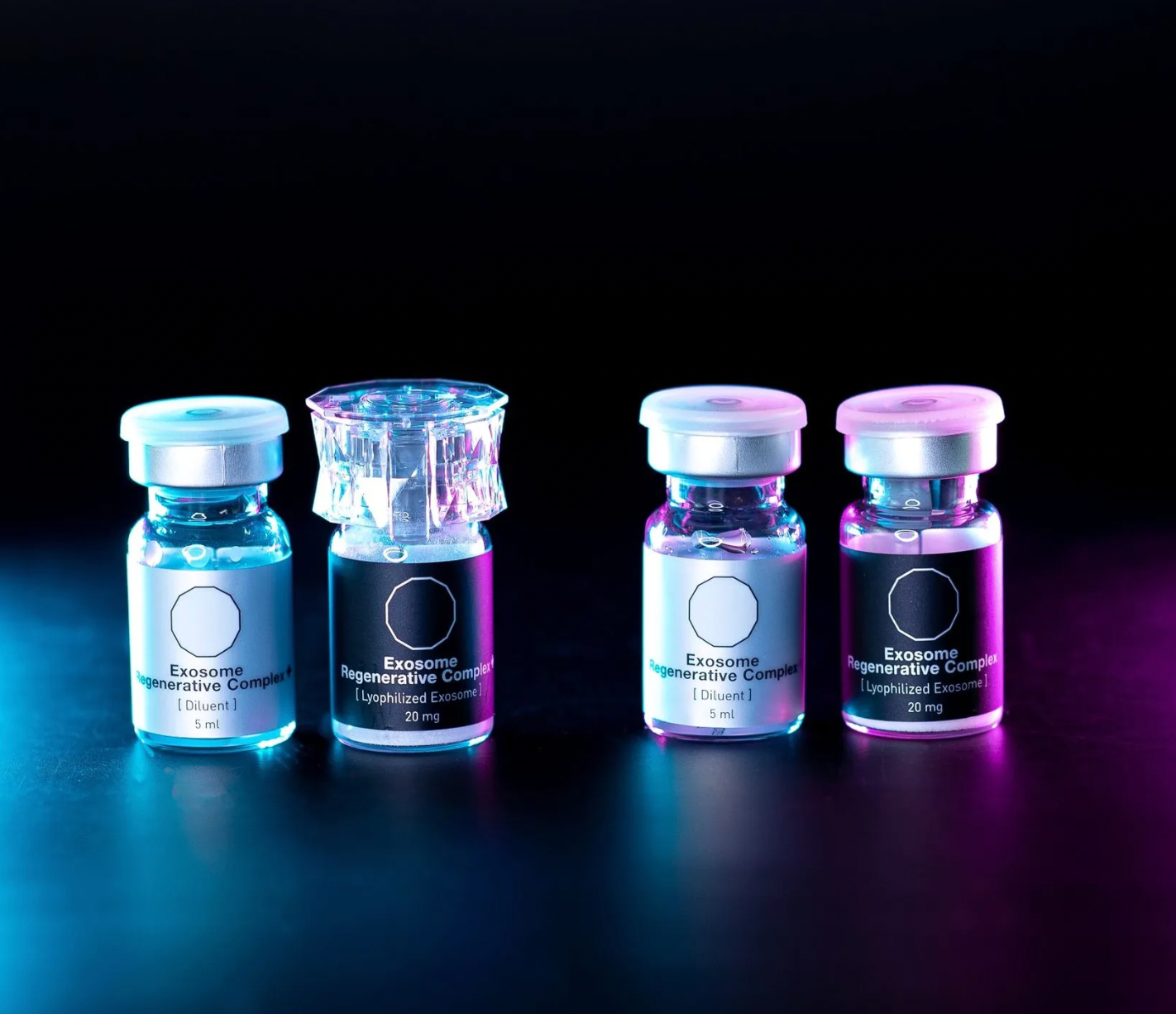
Regenerative medicine has produced some notable advances in aesthetic skin care over the past decade, but few have generated as much clinical interest as exosome therapy. If you have been researching skin rejuvenation options and come across this term, here is a clear explanation of what exosomes are, what they do, and why Melluna in Wilton, CT has made them a core part of our advanced treatment menu.
What Are Exosomes?
Exosomes are extracellular vesicles — extremely small structures that cells naturally produce and release into the surrounding tissue. Their primary function is cellular communication. They carry proteins, growth factors, microRNA, and other signaling molecules from one cell to another, facilitating tissue repair, immune coordination, and the regulation of collagen and elastin production.
In the skin specifically, exosomes act as messengers between fibroblasts (the cells responsible for collagen and elastin), keratinocytes (the cells forming the skin barrier), and immune cells. When skin is aging, damaged, or under chronic environmental stress, this communication system becomes less efficient — fewer repair signals are sent, collagen production slows, and the skin's ability to regenerate itself diminishes.
Exosome therapy introduces a concentrated supply of these signaling molecules directly to the skin, effectively restoring the cellular communication that drives healing and renewal. The results are biological rather than mechanical — the skin is not being filled or resurfaced, it is being prompted to repair and rebuild itself.
How Are Exosomes Used in Aesthetic Medicine?
In clinical settings, exosome treatments are applied topically, most often in conjunction with a procedure that creates microchannels in the skin to facilitate deeper penetration. Microneedling and laser treatments are the most common delivery methods, as both create the controlled surface disruption that allows exosomes to reach and interact with the deeper dermal layers where collagen-producing cells reside.
At Melluna in Fairfield County, CT, we offer exosome treatments as both a standalone rejuvenation option and as an add-on to microneedling or HALO laser sessions. The combination approach significantly amplifies the results of the primary procedure, delivering targeted regenerative signals to the tissue at precisely the moment it is most receptive to them.
What Benefits Do Exosomes Provide?
Patients who receive exosome treatments report improvements across multiple aspects of skin health. Texture and tone improve as fibroblast activity and collagen synthesis increase, producing refinements that become increasingly visible over the weeks following treatment. Fine lines and early wrinkles soften as collagen density builds. Post-procedure healing is noticeably accelerated, with reduced redness and inflammation lasting a shorter time after laser or microneedling sessions. Overall radiance and hydration improve as cellular communication supports better moisture retention and more even light reflection. And in patients with sun damage, acne scarring, or post-inflammatory pigmentation, the regenerative signaling in exosomes supports meaningful tissue repair over time.
Who Is a Candidate for Exosome Treatment?
Exosome therapy is appropriate for a wide range of patients. People in their 30s, 40s, 50s, and beyond who are experiencing early to moderate effects of skin aging — dullness, fine lines, uneven texture, or post-sun damage — are strong candidates. Patients who have undergone more aggressive procedures and want to support their recovery are also excellent candidates.
Exosome treatments are particularly suited to patients who prefer a science-based, restorative approach and want results that build over time rather than relying on surface correction alone. They are a good option for patients who want to maximize the results of their other treatments, not just add another procedure to their schedule.
Exosome Therapy at Melluna
At Melluna in Wilton, CT, the exosome products used in our treatments are rigorously sourced and tested for purity and potency. During your consultation, your provider will assess your skin and determine whether exosomes are best used as a standalone treatment, layered with microneedling, or incorporated into your HALO laser session. The recommendation will be based on your skin's actual condition and your goals — not a standard protocol applied to everyone.
Melluna sees patients from throughout Fairfield County, including Westport, Weston, New Canaan, Darien, Greenwich, Stamford, Norwalk, and Ridgefield.
FAQ
Are exosome treatments safe?
Yes. The exosome products used in aesthetic medicine are derived from rigorously tested, well-sourced preparations. Your provider will review your health history and skin condition before recommending treatment.
How many sessions are needed?
Many patients see meaningful improvement after a single session, particularly when exosomes are combined with microneedling or laser. A series of two to three treatments spaced four to six weeks apart is often recommended for more significant concerns such as scarring or extensive sun damage.
How long do results last?
Because exosome therapy supports the skin's own regenerative processes rather than adding a temporary substance, results tend to be progressive and lasting. Most patients find their results continue to improve for several months following treatment and persist well beyond what surface-level treatments deliver.
Can exosomes be combined with other treatments?
Yes, and this is often how they produce their best results. Exosomes pair particularly well with microneedling, HALO laser resurfacing, and PDO threads.
Interested in experiencing what exosome therapy can do for your skin? Book a consultation at Melluna in Wilton, CT today.