

What Is a Biostimulator? How Collagen-Stimulating Treatments Differ from Dermal Filler
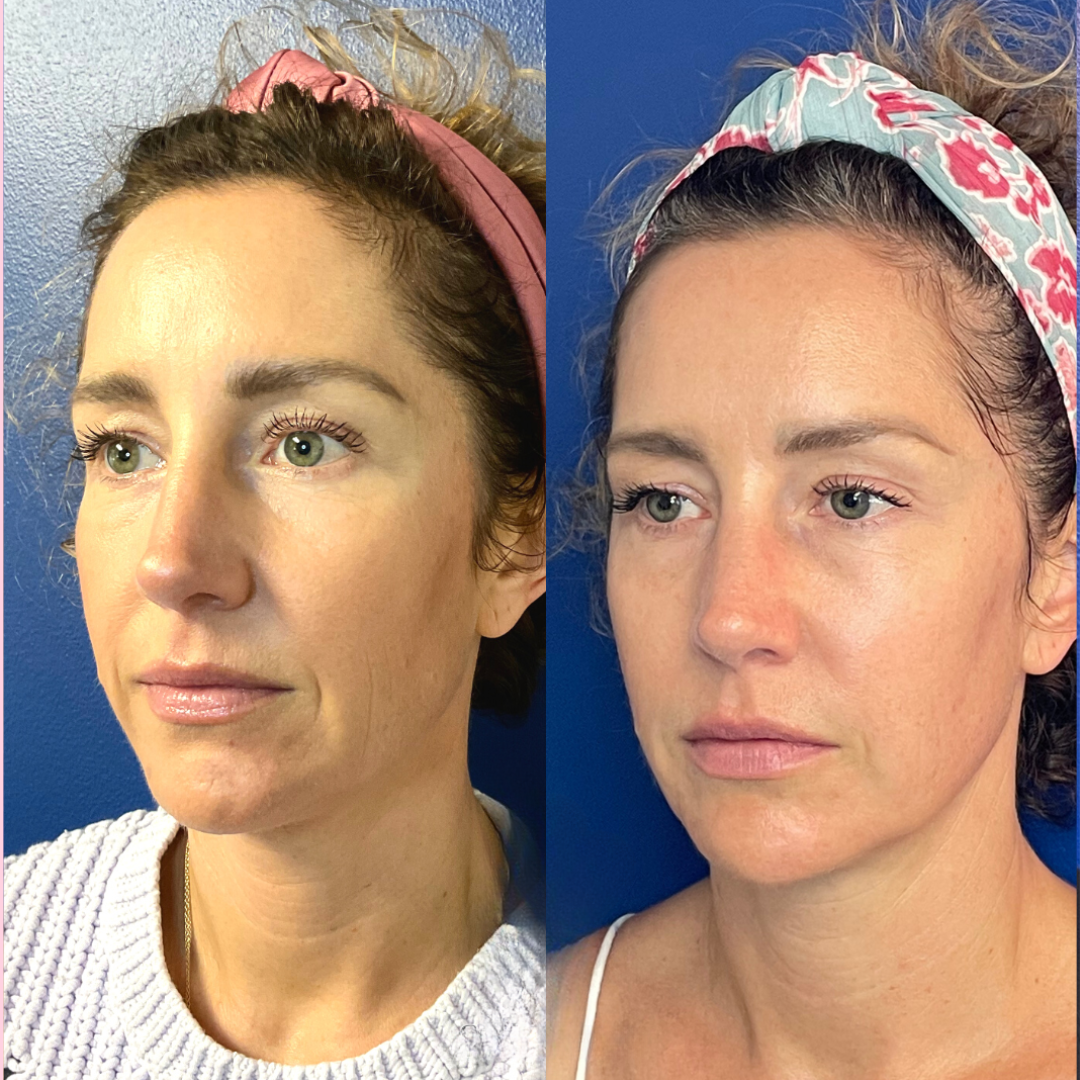
A biostimulator is an injectable aesthetic treatment that works by triggering the body's own collagen production rather than adding volume directly. Unlike hyaluronic acid dermal fillers, which physically fill space and can be dissolved, biostimulators like Sculptra (poly-L-lactic acid) and Renuva (adipose matrix) produce gradual, long-lasting improvements by rebuilding the skin's structural foundation from within.
Results develop over weeks to months and typically last two to five years. PRP and PRF are also considered biostimulatory treatments, using growth factors derived from the patient's own blood to stimulate cellular renewal and collagen remodeling. Biostimulators are best suited to patients who want progressive, natural-looking improvement rather than immediate volume correction.
At Melluna in Wilton, CT, we offer several biostimulatory treatments, including Sculptra, Renuva, and PRP/PRF. Here is a clear explanation of what these treatments are, how they work, and who tends to benefit most from them.
The Core Difference: Volume Replacement vs. Structural Rebuilding
Dermal fillers are most commonly made from hyaluronic acid (HA), and work by physically occupying space in the tissue. When injected, they immediately add volume to the treated area, softening lines and restoring fullness. Results are visible the same day. HA fillers are also reversible: an enzyme called hyaluronidase can dissolve them if needed. Depending on the product and the area treated, they typically last six to eighteen months.
Biostimulators work on a fundamentally different principle. Rather than adding a substance that functions as volume, they introduce a material that prompts the body to generate its own collagen and structural tissue. The treatment itself does not produce the result — your body does, over time, in response to the treatment. This is why results from biostimulators develop gradually, typically over four to eight weeks, and why they tend to last considerably longer than HA fillers.
This distinction has meaningful implications for candidacy. Biostimulators are often a better fit for patients who have experienced gradual, diffuse volume loss over a large area, rather than a specific, localized hollow that filler addresses well. They are also a strong choice for patients who prefer not to have a reversible filler in the tissue long-term, or who want results that build and evolve rather than appearing immediately.
Sculptra: Rebuilding Lost Volume Over Time
Sculptra (poly-L-lactic acid, or PLLA) is the most established biostimulator in aesthetic medicine, with a clinical history spanning more than two decades. When injected into the deeper layers of the dermis, the PLLA microparticles trigger a controlled inflammatory response that stimulates fibroblast activity, which are the cells responsible for collagen production. As the Sculptra particles are gradually absorbed over several months, the collagen they stimulated remains.
Because results build incrementally, most patients receive Sculptra in a series of two to three sessions, spaced four to six weeks apart. The improvements in facial fullness, skin quality, and the overall structural firmness of the face develop gradually over the following three to four months. Results typically last two to three years or more, making Sculptra one of the longest-lasting options in aesthetic injectable medicine.
Sculptra works particularly well for patients experiencing mid-face volume loss, hollowing in the temples, and the general deflation of the facial soft tissue that accompanies natural aging. It is also effective for body applications, including hip dips and areas of skin laxity where collagen stimulation is the primary goal.
Renuva: Restoring Lost Fat Tissue Directly
Renuva takes a different approach to the same problem. Rather than stimulating collagen, Renuva is an off-the-shelf adipose (fat) matrix, meaning it is derived from donated human fat tissue that has been processed and sterilized to remove cells while preserving the structural proteins and growth factors that support fat regeneration. When injected, it acts as a scaffold that encourages the patient's own fat cells to populate the area over time.
This makes Renuva particularly well-suited for areas where fat loss is the primary issue — hollow temples, under-eye hollows, and areas where the natural fat compartments of the face have diminished. Like Sculptra, results develop gradually over two to four months and tend to be long-lasting.
PRP and PRF: Growth Factor-Driven Regeneration
Platelet-rich plasma (PRP) and platelet-rich fibrin (PRF) are biostimulatory treatments derived from the patient's own blood. A small sample is drawn, processed through centrifugation to concentrate the platelets and growth factors, and then reinjected or applied topically to the treatment area.
The growth factors in PRP and PRF stimulate collagen production, promote tissue repair, and support new blood vessel formation. PRP and PRF are used at Melluna for skin rejuvenation, hair restoration, and as a complement to other treatments to enhance results and support the healing process.
Which Treatment Is Right for You?
The right choice depends on what you are trying to address, how quickly you want to see results, and your overall treatment goals. Some patients benefit most from a single biostimulator; others from a combination of biostimulatory and traditional filler treatments that address both immediate volume needs and longer-term structural rebuilding. Your provider at Melluna will assess your anatomy, skin quality, and goals during your consultation and recommend the approach that is most appropriate for your specific situation.
At Melluna, we serve patients from throughout Fairfield County, including Westport, Weston, New Canaan, Darien, Greenwich, Stamford, Norwalk, and Ridgefield.
Frequently Asked Questions
What is the difference between a biostimulator and a dermal filler? Dermal fillers physically add volume to the treated area and produce immediate results. Biostimulators trigger the body's own collagen and tissue regeneration processes, producing gradual results that tend to last significantly longer. Fillers are typically reversible; biostimulators are not.
How long do biostimulators like Sculptra last? Results from Sculptra typically last two to three years or more. Renuva results are also long-lasting, as the treatment encourages the body to generate its own tissue in the treatment area. PRP/PRF results vary depending on the area treated and the individual's response.
How many sessions of Sculptra will I need? Most patients receive two to three Sculptra sessions, spaced four to six weeks apart. The number of sessions depends on the degree of volume loss being addressed and your individual anatomy. Your provider will create a personalized plan during your consultation.
Can biostimulators and dermal fillers be used together? Yes. Many patients benefit from combining a biostimulator — to rebuild structural collagen and address diffuse volume loss — with targeted dermal filler to address specific hollows or contour concerns. Your provider will determine whether a combination approach is appropriate for your goals.
Who is a good candidate for a biostimulator? Ideal candidates are adults who are experiencing gradual volume loss, declining skin quality, or structural changes to the face that have developed over time. Biostimulators are particularly well-suited to patients who want progressive, natural-looking results and are not looking for an immediate transformation. A consultation with your Melluna provider will determine which treatment, or combination of treatments, is right for you.
Ready to explore whether a biostimulator is the right approach for your goals?
Book a consultation at Melluna in Wilton, CT.